Santa Rosa Or Windsor? How To Choose Your Wine Country Home Base
February 12, 2026
February 12, 2026
Trying to pick between Santa Rosa and Windsor for your Sonoma home base? You are not alone. Both offer great access to wine country, strong community ties, and beautiful Northern California scenery. By the end of this guide, you will understand the key trade-offs in housing, commute, lifestyle, schools, and risk so you can choose with confidence. Let’s dive in.
Santa Rosa and Windsor sit along the Highway 101 corridor in central Sonoma County. Santa Rosa is the county seat and the largest city, with about 178,000 residents. Windsor is a smaller town of roughly 27,000 residents with a suburban feel and newer neighborhoods. Both are excellent jumping-off points for Russian River, Dry Creek, Alexander Valley, and Sonoma Valley wine regions.
You will see a wide mix. Historic Victorians and early craftsman homes sit near downtown and Railroad Square, while postwar tracts and newer infill condos bring variety across price points. There are also townhomes, small-lot infill, and multifamily options. In recent years, Santa Rosa has emphasized infill and downtown redevelopment, so you will find more urban product types than in Windsor.
Windsor leans single-family and master-planned. Many homes were built in the 1990s through the 2010s, with cul-de-sacs, larger lots, and modern floor plans. You will find fewer condos and multifamily properties, and the overall resale pool is smaller. If you want a newer, move-in-ready single-family home with neighborhood uniformity, Windsor often makes the search straightforward.
Sonoma County saw strong price growth in the mid-2010s through 2021, followed by periods of cooling and normalization in 2022 to 2024. Santa Rosa typically shows a wider spread of prices due to its mix of housing types. Windsor’s median often reflects its concentration of single-family homes, and limited inventory can keep pricing competitive.
When you compare current numbers, focus on:
Use recent MLS or county data and compare the same time windows for both cities. Because market data changes quickly, update figures within 30 days of making decisions.
Santa Rosa has multiple Highway 101 access points, while Windsor sits slightly farther north with easy access to Healdsburg and northern Sonoma County. For San Francisco and Marin commutes, 101 traffic and Golden Gate Bridge timing are the biggest variables. Many residents work locally in healthcare, education, light manufacturing, small business, and hospitality, with a growing share on hybrid or remote schedules.
Both cities are on the SMART rail corridor that connects to Marin and the Larkspur ferry to San Francisco. Commuter rail plus ferry can be a good alternative to peak-hour freeway driving. For your routine, test-drive the commute at your typical departure times and include school drop-off or pickup if needed.
Santa Rosa offers a larger downtown scene anchored by historic Railroad Square, plus theaters, museums, breweries, and the Sonoma County Fairgrounds. You will also find major medical centers and specialty care. The city’s central location makes it easy to reach multiple AVAs, from Sonoma Valley to parts of Russian River and the Sonoma Coast.
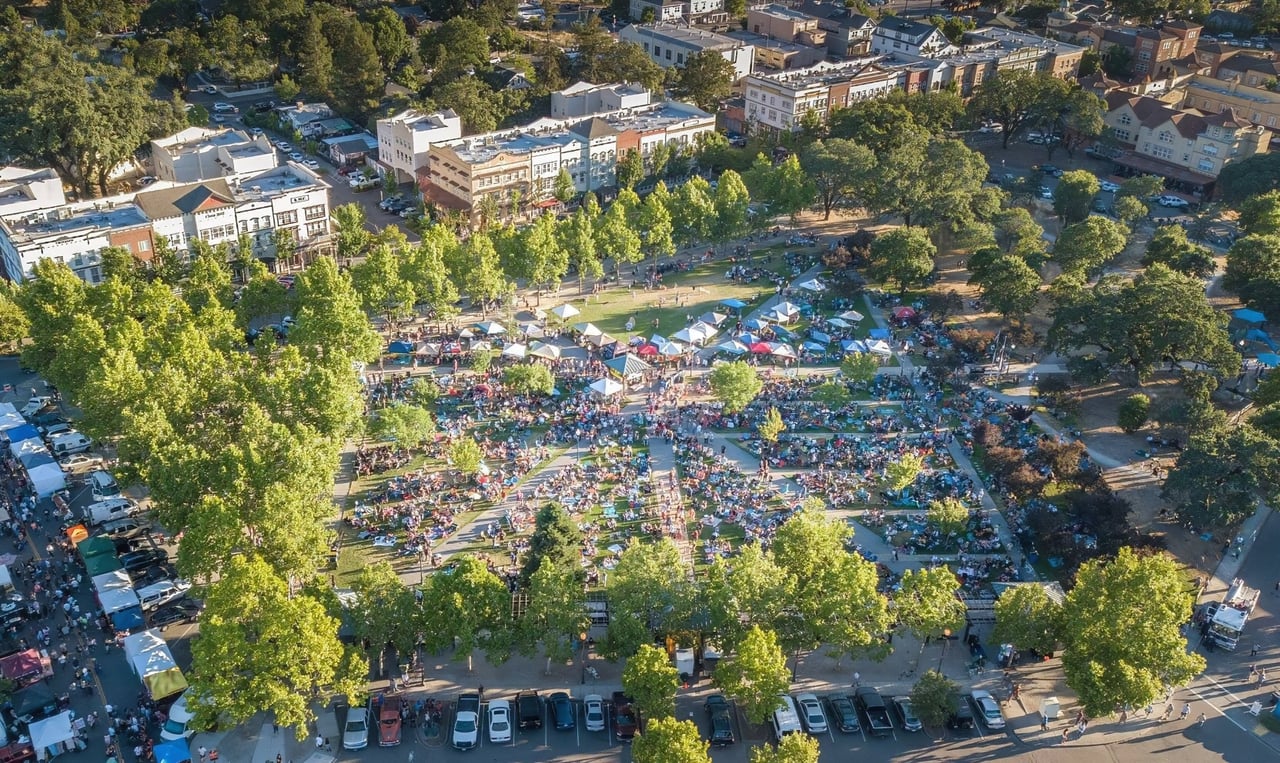
Windsor’s Town Green hosts farmers’ markets and concerts, creating a true small-town hub. You will have quick access to the Russian River and Dry Creek tasting corridors to the north. Park systems and greenbelt trails support an outdoor, family-focused rhythm.
Windsor Unified School District serves Windsor. Santa Rosa is served by Santa Rosa City Schools along with several elementary districts within the city’s footprint. Each city has neighborhoods with different school assignments and program options.
Because school quality can vary by campus, verify the exact school boundary for any property, review recent state data, and visit schools when possible. Look beyond a single rating to consider programs, transportation, and how the school day aligns with your work commute.
Both cities sit in a region with wildfire history and ongoing mitigation efforts. Santa Rosa experienced significant impacts in 2017, and you will see rebuilt neighborhoods and more attention to defensible space and building standards. Parcel-level wildfire exposure can vary street by street, so review CAL FIRE Fire Hazard Severity Zone maps for each property. Also check FEMA flood maps for low-lying areas.
Insurance availability and premiums have changed in parts of California. Get quotes early in your due diligence, especially for homes near wildland areas. For older homes, ask about seismic upgrades and foundation condition.
Santa Rosa’s planning outlook emphasizes infill, mixed-use, and transit-oriented development, especially near downtown. You will see more multifamily approvals and redevelopment in the pipeline. Windsor has a smaller geographic footprint and focuses growth on incremental infill and enhancing the town center, with planning choices that protect neighborhood character.
Choose Santa Rosa if you want:
Choose Windsor if you want:
A simple on-the-ground plan can clarify your choice:
Talk to local parents, school office staff, and public safety officials. You will get practical insights on traffic, after-school options, and neighborhood rhythms.
Bring this list to every showing so you can compare apples to apples:
If you are still deciding between Santa Rosa and Windsor, you do not need to guess. We map your must-haves, bring current market data, and line up homes that reflect the trade-offs you care about most. You get a side-by-side path to the right outcome, not just a list of options.
Ready to explore with a local advisor who knows both markets well? Connect with Joe Henderson to plan your Sonoma home search.
Stay up to date on the latest real estate trends.
Work with Joe Henderson and experience the difference of true professionalism and consistency in service. Your goals are our mission—partner with Joe for a seamless, rewarding real estate journey.