In-Town Vs Country Living Around Healdsburg
May 28, 2026
May 28, 2026
Are you drawn to the buzz of downtown Healdsburg, or does the idea of more space on the rural edge sound like a better fit? It is a common question for buyers and sellers here, because the difference is not just about scenery. It is also about daily routines, utilities, upkeep, and how you want to spend your time. This guide breaks down the real tradeoffs around Healdsburg so you can choose the setting that fits your lifestyle and goals. Let’s dive in.
Healdsburg is organized around a compact city core and a broader surrounding planning area. According to the city’s General Plan, that planning area includes the incorporated city, nearby unincorporated land in the Sphere of Influence, and certain city-owned sites such as the airport, well fields, and wastewater plant.
That matters because the city’s Urban Growth Boundary is designed to concentrate development in existing developed areas while promoting agriculture and open space outside that boundary. The same General Plan states that city water and sewer service may not be extended outside the Urban Growth Boundary except under certain circumstances.
In simple terms, the in-town versus country decision around Healdsburg is often a choice between two different ownership models. One is compact, service-rich, and walkable. The other is more rural, more land-oriented, and often more self-managed.
For many buyers, the heart of in-town Healdsburg is the Plaza area near Matheson Street and Healdsburg Avenue. The city describes the Plaza as a gathering place for concerts, community events, and everyday use, which gives the downtown core a very active and connected feel.
The downtown farmers market now operates at the Foley Family Community Pavilion, and the city notes that Tuesday market shoppers can do weekly grocery shopping downtown. If you like the idea of errands, dining, and community events being close together, this part of Healdsburg offers that convenience.
Healdsburg is just under five square miles, and the city says it is ideal for walking. The city also points to pedestrian pathways and trails, free downtown parking lots, free limited street parking, a free Route 67 shuttle, Route 60 service to Santa Rosa, Windsor, and Cloverdale, DASH rides for older adults, and ride-share and hotel-shuttle options.
That combination can make a lower-car lifestyle more realistic near the Plaza than in more rural areas. You may still want a car, but your day-to-day options are broader when restaurants, shops, events, and services are concentrated nearby.
In-town living usually means shorter, more flexible errands. A quick trip for coffee, groceries, or an evening out can be simpler when you are close to the Plaza and surrounding downtown blocks.
The city’s planning framework also supports this compact pattern. Downtown commercial uses are intended to be pedestrian-oriented at the ground floor, and the city is studying how greater housing density and different housing types can fit downtown.
City-managed utility services also add to the convenience. Healdsburg’s utility department manages city water, wastewater, solid waste, and street sweeping service for residents and businesses.
Convenience does not mean zero tradeoffs. The same downtown energy that makes the Plaza attractive can also mean more visitor activity, event traffic, and more active parking management than you would likely see at a rural address.
If you value being close to restaurants, markets, and events, that may feel like a worthwhile trade. If you want more separation, less activity, and more room around you, the country edge may feel more natural.
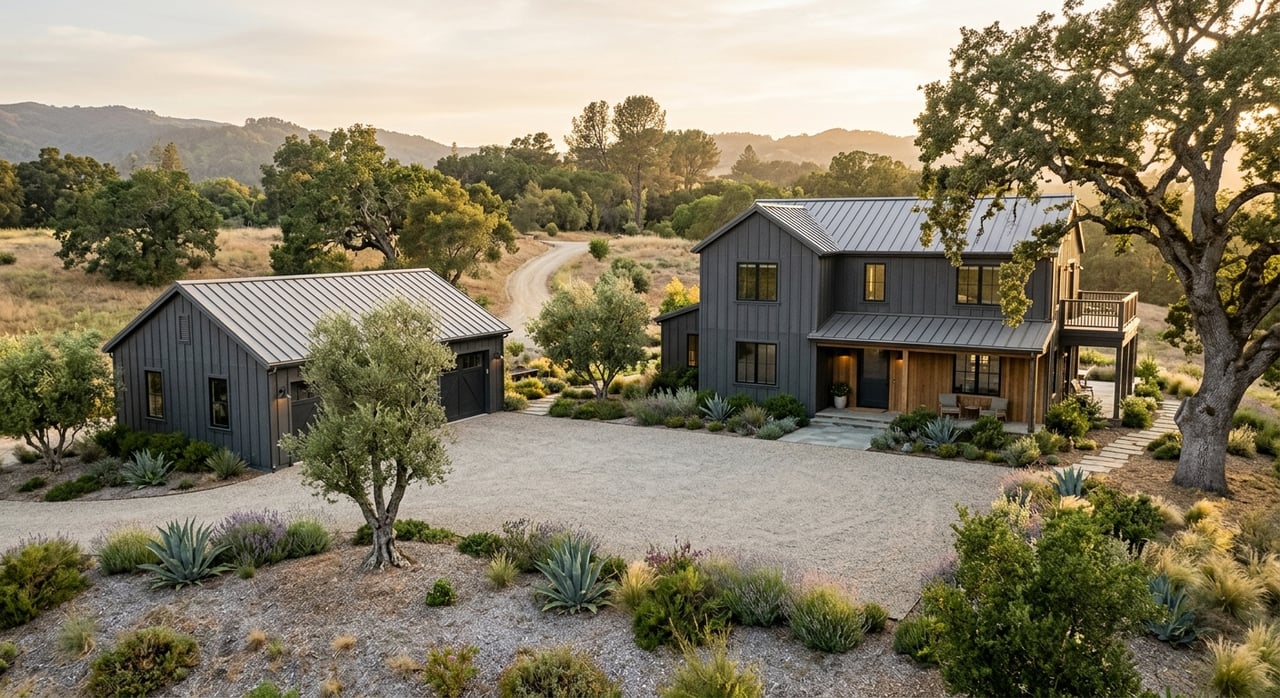
Outside the core, the character changes quickly. The General Plan promotes agricultural and open space uses outside the more developed in-town area, which is a big part of why rural properties around Healdsburg can feel so appealing.
For some buyers, that appeal is all about privacy, views, acreage, and a quieter setting. For others, it is about having more outdoor space, more distance from neighbors, or a property that feels closely tied to the wine country landscape.
That said, country living is not just in-town living with a bigger lot. It usually comes with different systems, different responsibilities, and more parcel-specific due diligence.
One of the biggest differences is utilities. Sonoma County states that septic systems are required where public sewer is not available, and a well construction permit is required for new or replacement supply wells.
That means some rural properties may rely on private systems rather than city services. Buyers should not assume that water and wastewater function the same way they do in town, especially because Healdsburg’s General Plan says city water and sewer service may not be extended outside the Urban Growth Boundary except under certain circumstances.
There is also an important current detail on wells. Sonoma County notes that non-emergency well permitting is suspended pursuant to a Sonoma County Superior Court order served on December 17, 2024, so buyers should verify the current permitting status before assuming a new well will be straightforward.
If you are considering a vineyard-adjacent or rural property, it is important to understand what living near agriculture can involve. Sonoma County’s Right to Farm Ordinance says residents near agricultural operations should expect normal farm-related impacts such as noise, odors, dust, smoke, insects, machinery, manure handling, and fertilizer or pesticide application.
County policy also says those properly conducted impacts are not treated as a nuisance. For the right buyer, this is simply part of living in an agricultural area. It is not necessarily a negative, but it is something to understand clearly before you buy.
For buyers on the rural edge, wildfire preparation is a key part of ownership. CAL FIRE says homes need both home hardening and 100 feet of defensible space, and the State Fire Marshal’s hazard maps classify lands as moderate, high, or very high based on factors such as fuel, slope, and wind.
In practical terms, country properties often require more vegetation management and more property-specific review than a typical in-town home. This is one of the most important reasons to look beyond the view and understand the long-term upkeep involved.
Here is a simple way to think about the difference:
| Feature | In-Town Healdsburg | Country Edge Around Healdsburg |
|---|---|---|
| Daily errands | Often shorter and more walkable | Usually more car-dependent |
| Utilities | More likely city-managed services | May involve well and septic |
| Setting | Active, compact, connected | Private, spacious, rural |
| Surroundings | Downtown activity and events | Agricultural and open space uses |
| Maintenance | Less land management in many cases | More parcel upkeep and vegetation management |
| Lifestyle fit | Convenience and flexibility | Space, views, and privacy |
If you want easy access to downtown amenities, a more walkable routine, and less land-management work, the Plaza core often makes the most sense. It can be a strong fit for full-time residents, second-home buyers who want a lock-and-leave feel, and sellers whose homes benefit from a low-friction lifestyle story.
If you want privacy, views, acreage, or a more rural wine country setting, the country edge may be a better match. It can be especially appealing if you are comfortable with agricultural neighbors, private utility systems, and the ongoing work that comes with a larger parcel.
Neither choice is universally better. The right answer depends on how you want to live, how much hands-on ownership you want, and which tradeoffs feel worth it to you.
If you are selling an in-town home, buyers often respond to convenience, walkability, and easier day-to-day living. A marketing strategy for these homes usually benefits from highlighting proximity to downtown amenities, transportation options, and the appeal of city-managed services.
If you are selling a country property, buyers are usually evaluating a different set of priorities. They may care more about land, privacy, views, usable outdoor space, and the condition or status of systems like wells, septic, access, and vegetation management.
This is where preparation matters. Clear property information, thoughtful positioning, and a steady negotiation strategy can make a major difference, especially when buyers are weighing the practical details of rural ownership.
Around Healdsburg, broad location labels do not always tell the full story. Because the planning area spans both city and unincorporated land, two properties that seem close on a map can operate very differently.
That is why parcel-by-parcel verification matters. Utility access, permitting questions, wildfire considerations, and surrounding land uses all deserve a close look before you make a decision.
A careful review upfront can save you time, money, and frustration later. It also gives you a clearer picture of whether a property truly matches your lifestyle and risk tolerance.
Whether you are choosing between downtown convenience and rural space, or preparing to position your property for the right buyer, local knowledge and disciplined execution matter. If you want clear guidance on the Healdsburg market and a practical plan tailored to your goals, connect with Joe Henderson.
Stay up to date on the latest real estate trends.
Work with Joe Henderson and experience the difference of true professionalism and consistency in service. Your goals are our mission—partner with Joe for a seamless, rewarding real estate journey.