Santa Rosa's Median Price Is Telling You One Story. The Market Is Living Two.
September 17, 2026
September 17, 2026
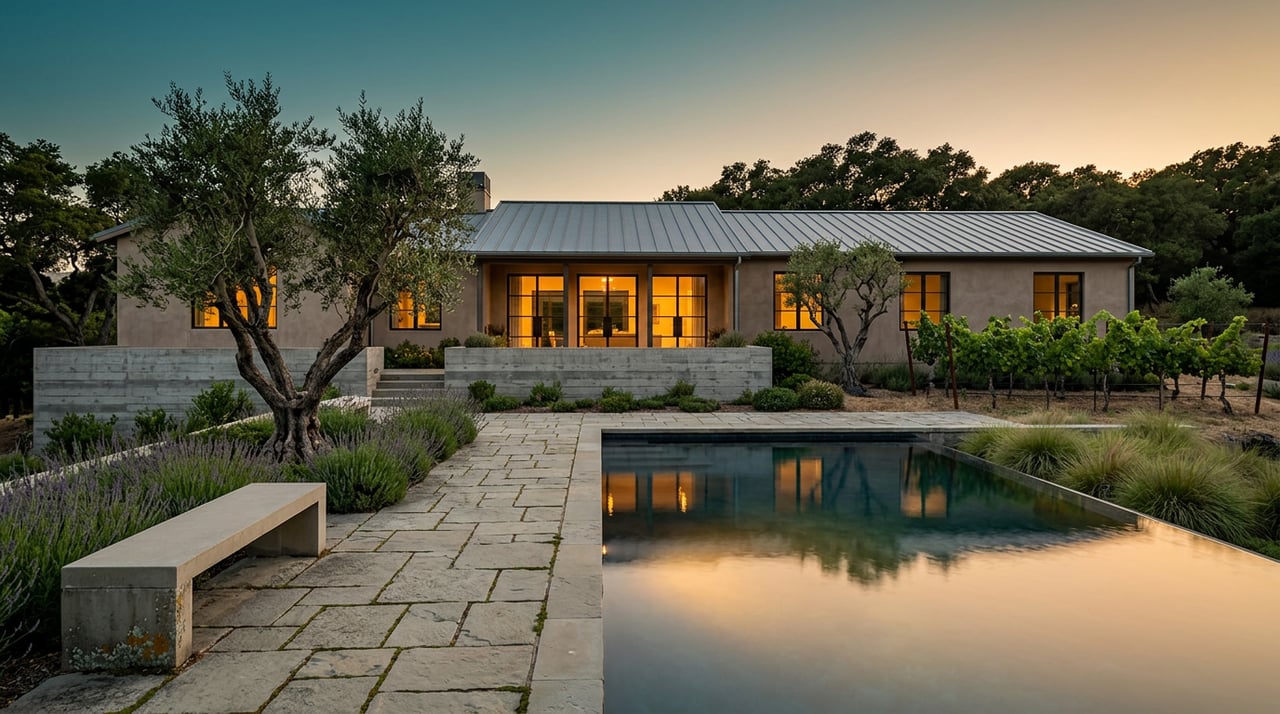
Picture two four-bedroom homes that hit the market within days of each other this year. Both are newer construction, built within the last several years on rebuilt lots. Both list within a few thousand dollars of the same price. One sits in Coffey Park, flat and gridded, close to Highway 101. The other sits up in Fountaingrove, on a hillside lot with a view. On paper, a buyer comparing the two sees near-identical homes competing for the same budget.
What the listing sheet does not show is what happens after the offer is accepted. The Coffey Park home tends to close on an ordinary timeline, with a standard insurance quote landing within about a week. The Fountaingrove home can take several rounds of insurance shopping, a call to the California FAIR Plan, and a lender who understands what a Wildland-Urban Interface property requires before the loan contingency comes off. Same rough price. Same square footage. Very different path to the closing table.
That gap is a small, concrete version of a bigger pattern showing up across the whole city. Santa Rosa's citywide median, hovering around $750,000 through most of 2026, describes a market that does not actually exist as a single thing. Split it by price band and you find two markets moving in opposite directions at the same time, and the neighborhood you're shopping in matters less than which side of roughly $1 million to $2 million your budget falls on.
In the first quarter of 2026, Santa Rosa's under-$1 million segment tightened hard. Active inventory in that band fell to 119.7 homes, down 27.5 percent from the same quarter a year earlier, while new listings dropped 23.3 percent to 95.3 per month. Buyers kept showing up anyway. Pended sales rose 12.9 percent and closed sales ticked up 4 percent, pushing the absorption rate, the share of available homes that actually go under contract in a month, from 41.1 percent to 58.8 percent. That is the clearest seller's-market signal recorded anywhere in the Sonoma County dataset that quarter.
Move up past $2 million and the story flips. Inventory in that tier rose 18 percent to 43 homes. New listings fell 17 percent. Absorption dropped to just 6.9 percent. Months of supply, the number of months it would take to sell through current inventory at the current sales pace, stretched to 15.4, the deepest surplus of any Santa Rosa price segment. Sellers in that tier closed at 91 percent of their original list price, meaning the average luxury seller gave up real money before a deal got done. Average days on market ran to 138, close to four and a half months from list to close.
The middle band, roughly $1 million to $2 million, sat in between and told its own quiet story. Absorption ticked up only modestly, from 20.4 percent to 24.1 percent, with months of supply near 5.2. Sold-to-original-list dropped three points to 92.7 percent, which works out to more than $100,000 off the original ask on a typical $1.5 million Santa Rosa home before it finds a buyer. Price per square foot in that tier actually fell 4.5 percent even as days on market improved slightly, a combination that points to sellers cutting price sooner rather than buyers moving faster.
| Price Band | Absorption (Q1 2026) | Months of Supply | Sold-to-Original List |
|---|---|---|---|
| Under $1M | 58.8%, up from 41.1% a year earlier | Not separately reported, but inventory fell 27.5% YoY while demand held | Not separately reported |
| $1M to $2M | 24.1%, up from 20.4% | 5.2 months | 92.7% |
| Over $2M | 6.9% | 15.4 months | 91% |
By August 2026, the citywide read still described Santa Rosa as tight overall, with demand running about 16 percent ahead of the prior year, supply at 2.5 months against the six that typically marks a balanced market, and well-presented homes closing at 99 percent of list in around 50 days. That headline number is true and it is also the average of two very different experiences depending on where you're shopping.
The fast side of the market clusters in specific neighborhoods, not just a price bracket. As of this spring, Northwest Santa Rosa, Coffey Park, and Larkfield-Wikiup carried the tightest inventory relative to demand in the city, with well-priced homes typically finding a buyer in under 30 days. Bennett Valley and Rincon Valley have shown similar competitive pressure at the entry and lower-mid price points, the range where a Bay Area relocator and a local first-time buyer are often writing offers on the same house.
Fountaingrove sits at the other end of that spectrum. Homes there routinely spend 60 days or more on market, a pace that has more to do with a smaller buyer pool at higher price points than with anything wrong with the homes themselves. Fountaingrove's own value spread makes the point: neighborhood median values checked this year ranged from roughly $1.24 million to $1.7 million depending on the tracker and window used, while comparable-size homes a few miles away in flatter, older parts of the city were pricing in the $500,000s to $600,000s over the same stretch. That is not a normal size-and-finish gradient. It is two different markets sharing a zip code.
Both Coffey Park and Fountaingrove lost a large share of their housing stock in the October 2017 Tubbs Fire, which is why both neighborhoods now have a meaningfully newer mix of homes than places like West End or the Junior College area. Coffey Park's rebuild involved more than 50 different builders working on nearly identical lot footprints, and the city is still closing out infrastructure from that period. In February 2026, the Santa Rosa City Council awarded a $4.7 million contract to Argonaut Contractors for the Hopper Avenue Corridor Improvements Project, one of the last pieces of the decade-long recovery effort connecting Coffey Park to Highway 101, with construction beginning that spring.
Fountaingrove's rebuild has moved on a slower, more uneven timeline. Its lots range from a fifth of an acre to more than an acre, some with golf course frontage through the Fountaingrove Club, some still carrying a foundation from a home lost in 2017. That variation is part of why a single median for the neighborhood hides more than it reveals.
The part that catches buyers off guard is that newer construction does not automatically mean an easier insurance conversation. California's insurer of last resort, the FAIR Plan, grew from roughly 126,000 policies in 2018 to more than 400,000 by 2025, a scale shift that tracks closely with the years since the Tubbs Fire. In October 2025, the FAIR Plan filed for an average rate increase of about 35.8 percent, targeting an April 2026 effective date. A hillside lot's brush exposure can outweigh the benefit of a recent build date in how that policy gets priced, which is why documented wildfire hardening, not just a new roof, is what actually moves the premium. A buyer shopping a $1.5 million Fountaingrove listing should build insurance shopping time into the contingency period the same way they would budget for inspections. A buyer shopping a comparably priced flatland home in Coffey Park usually does not need to.
If your budget sits under $1 million and you're looking at Northwest Santa Rosa, Coffey Park, Bennett Valley, or Rincon Valley, plan to move quickly. Inventory has been shrinking faster than new listings can replace it, and well-prepared homes are drawing competition. Pre-approval in hand and a clean, complete offer matter more here than trying to time the market for a better month.
If you're shopping the $1 million to $2 million range, you have more room than the headline "seller's market" suggests. The sold-to-original-list ratio slipping to 92.7 percent means sellers are already discounting from their opening number, and price per square foot has actually softened. A 5 to 7 percent gap between original ask and final price is common enough to negotiate toward, not an outlier to expect only in a downturn.
If you're shopping above $2 million, largely in and around Fountaingrove, patience is the advantage. With 15.4 months of supply and average days on market near four and a half months, there is little urgency to compete against other buyers. The tradeoff is transactional: build extra time into your timeline for insurance quotes on hillside properties, and confirm your lender has experience with Wildland-Urban Interface underwriting before you're up against a contingency deadline.
Sellers face the mirror image. Below $1 million, accurate pricing from day one still converts fast into a full-price close, since buyers here have plenty of comparables and use them. In the middle and luxury tiers, the risk runs the other direction: a 5 to 7 percent overreach on the initial list price becomes a real cost once the market corrects it for you.
If Santa Rosa is described as a seller's market, does that mean I should expect a bidding war? Only if you're shopping under roughly $1 million. Above $2 million, the same city has been running with months of unsold inventory and real room to negotiate.
Does a newer home mean an easier closing process? Not automatically. A recently built home on a hillside lot can still require multiple rounds of insurance shopping and specialized underwriting, while a similarly new home on flatter ground closes on an ordinary timeline. Ask early, not at week three of escrow.
Why does one Santa Rosa neighborhood's median look so different from the one next to it? Terrain, lot size variation, and how much of the neighborhood was rebuilt on a shared timeline all play a role. A single citywide or even neighborhood-wide median can average together homes on very different footings.
A median price is a starting point for a conversation, not the conversation itself. If you're trying to figure out where your specific budget and timeline actually land in this market, Joe Henderson has spent more than two decades reading Sonoma County's price bands from both the real estate and finance side of the table. Let's Connect.
Stay up to date on the latest real estate trends.

Work with Joe Henderson and experience the difference of true professionalism and consistency in service. Your goals are our mission—partner with Joe for a seamless, rewarding real estate journey.